A written report you can use
You receive documented findings, sample locations if collected, and straightforward recommendations tied to what we observed on site.
Serving Philadelphia, Pennsylvania & surrounding areas
24/7 Emergency Response
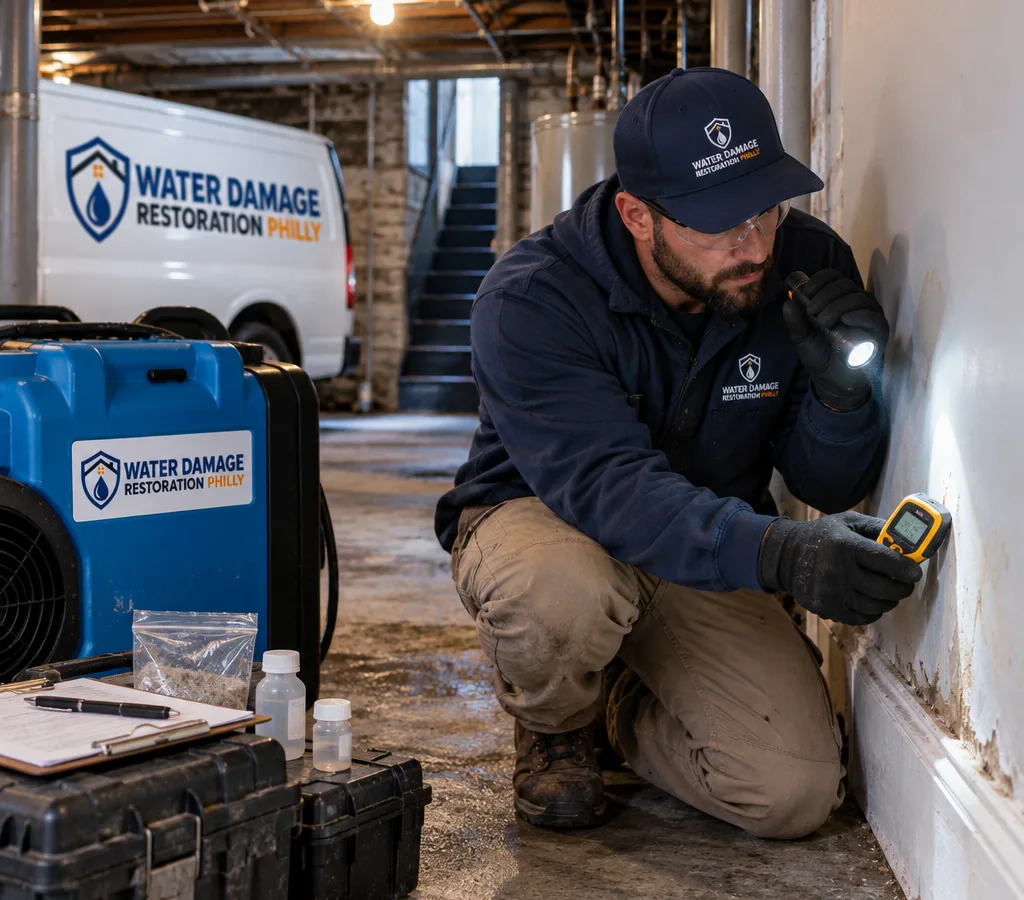
Get a clear, written assessment of suspected mold, moisture conditions, and practical next steps so you can make decisions with confidence.
If you are searching for mold inspection Philadelphia homeowners can rely on, you are probably dealing with one of a few stressful triggers: a musty odor that will not go away, recent water intrusion, staining on drywall, or health concerns that seem worse indoors.
A good inspection does two things at once. It confirms what is actually present—mold growth, elevated moisture, or conditions that can support mold—and it documents where the moisture is coming from so you can fix the cause instead of chasing symptoms. Our team at Water Damage Restoration Philly focuses on fast scheduling, careful testing, and reporting that is easy to act on.
Philadelphia housing also has some patterns that make a thorough inspection important. Many properties include older masonry foundations, finished basements, and tight party walls in rowhomes where moisture can travel and hide. That means the right approach often involves more than one tool and more than a quick glance at a single visible spot.
A complete mold inspection is a mix of observation, measurement, and targeted sampling based on what we find in your home.
Typical components include:
We also explain what the results mean in plain language. Not every dark spot is mold, and not every mold concern needs the same response. The goal is to leave you with a plan: what should be corrected, what should be removed or cleaned by a qualified professional, and what should be monitored.
If your concern started after a leak, roof issue, or basement seepage, it often helps to pair the inspection findings with a plan for drying and repairs; our water damage restoration services are available when moisture problems are active or recurring.
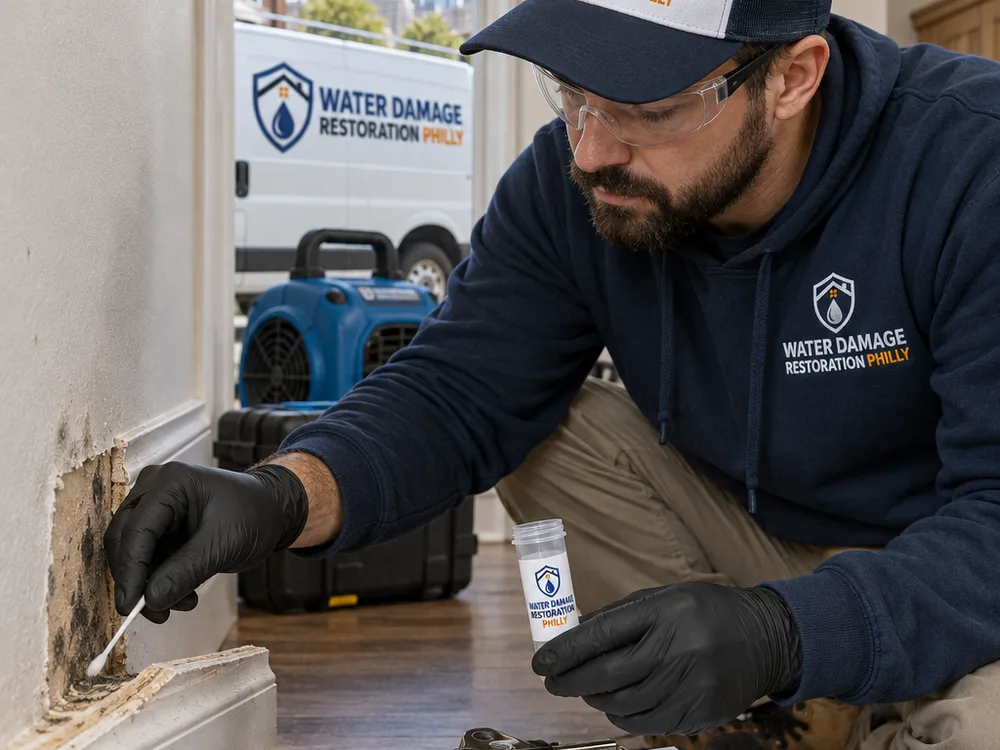
You receive documented findings, sample locations if collected, and straightforward recommendations tied to what we observed on site.
Mold follows moisture. We focus on locating damp materials and likely sources so the fix addresses the cause, not just the visible result.
Sampling is chosen based on conditions and goals. If testing will not change the next step, we will say so.
Finished basements and renovated rowhomes can hide moisture. We inspect methodically and explain what is and is not visible without opening building assemblies.
When remediation is appropriate, we outline practical options such as containment considerations, material removal versus cleaning, and post-cleanup verification.
You do not need to wait for a full-blown outbreak to schedule a mold inspection. In practice, most inspections start with a change in the home or a specific event.
Common local scenarios include:
During the visit we will ask about timing—when the odor started, when staining appeared, or when a leak occurred—because that context helps distinguish an active moisture problem from older, inactive staining.
We ask where you are seeing or smelling issues, any recent leaks or humidity problems, and what you need the inspection to accomplish: peace of mind, real estate documentation, post-remediation verification, or troubleshooting.
We walk the affected areas, check humidity and moisture content in suspect materials, and look for building conditions that keep areas damp, such as poor drainage near foundations or missing ventilation.
If sampling is likely to change the plan, we collect air and/or surface samples from specific locations. We document what was sampled and why.
You receive a clear summary of observations and results when testing is performed, plus recommended next actions tied to the likely moisture source and materials involved.
We talk through practical options, timelines, and who typically performs each step. When drying or repairs are needed to stop recurrence, we can coordinate a plan based on what the inspection found.
Mold inspection in Philadelphia typically ranges from about $300 to $750 for a standard home, with larger properties, multiple problem areas, or extensive sampling pushing totals higher. A basic visual inspection with moisture checks is usually at the lower end, while inspections that include multiple air samples and several surface samples trend higher.
Final pricing depends on home size, how many areas need inspection, access such as finished basements or tight mechanical spaces, how many samples are collected, and whether post-remediation verification is needed. Your exact cost is confirmed during scheduling and finalized after the on-site inspection scope is clear.
Schedule a mold inspection in Philadelphia and get a written assessment of the conditions, any recommended testing, and practical next steps to stop the moisture problem and prevent recurrence.