Safety-first site assessment
We start by identifying hazards like compromised framing, damaged electrical, and unstable finishes. If a space is not safe to enter, we stabilize and coordinate next steps before cleanup begins.
Serving Philadelphia, Pennsylvania & surrounding areas
24/7 Emergency Response
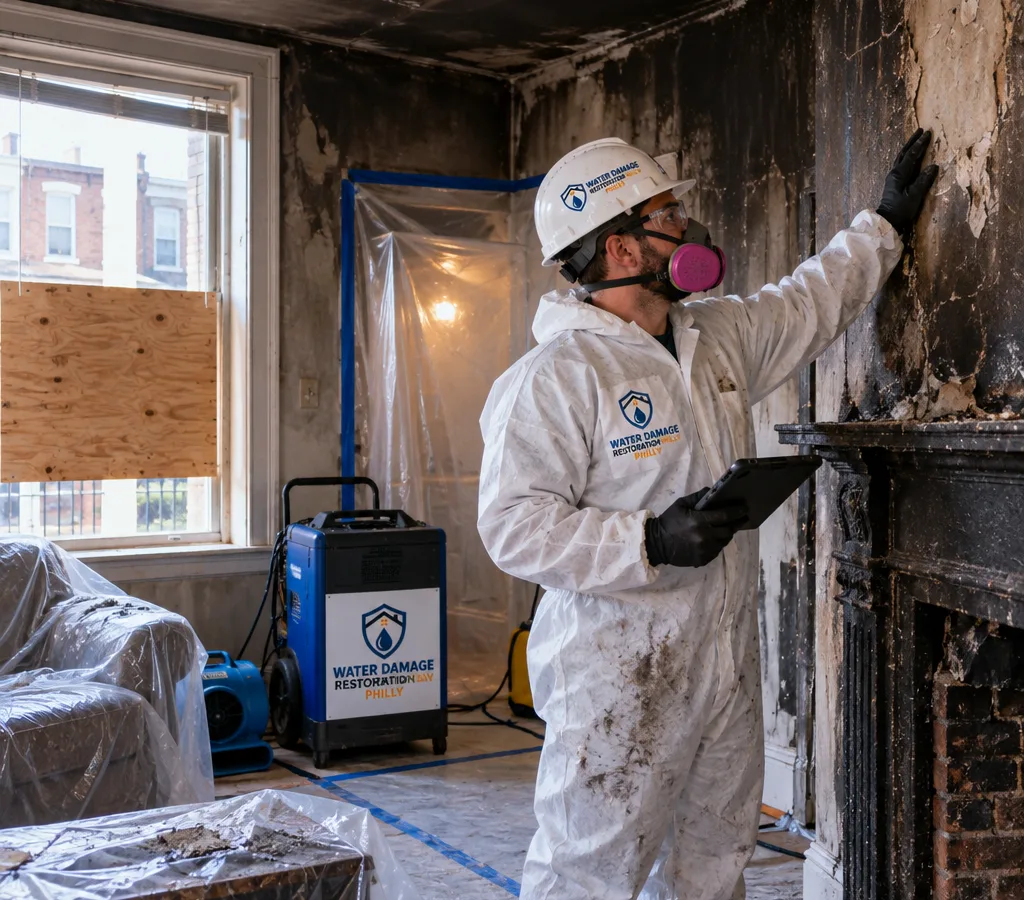
If your property has fire, smoke, or soot damage, our crew can secure the site, document the loss, and start cleanup and deodorization quickly so you can move toward repairs with a clear plan.
Fire damage rarely stops at what burned. In Philadelphia homes and small commercial spaces, smoke can travel through stairwells, HVAC returns, and shared walls, leaving soot residues and odor in rooms that never saw flames. Fire damage restoration Philadelphia work is the full set of steps that takes a structure from unstable and contaminated back to clean, dry, and ready for rebuild.
Typical scope includes:
If the loss also includes water impacts, water damage restoration in Philadelphia can run alongside smoke cleanup because drying and microbial prevention are often part of the same recovery plan.
A lot of properties in Philadelphia have older building materials and tight layouts that affect how smoke and soot behave. Rowhomes and twins can concentrate heat and push smoke upward fast, and older plaster and wood trim can hold odor if residues are not removed correctly.
Here is what we plan for on local jobs:
Rowhome density and party walls. We check adjoining walls, shared chases, and attics for smoke migration, and use containment and negative air when needed to keep soot from spreading during cleaning.
Basements and first-floor commercial spaces. Soot settles low and mixes with moisture after suppression. We use pressure washing where appropriate, HEPA vacuuming, and controlled drying so odor does not rebound.
Northeast Philly and Port Richmond housing stock. Many homes have layered renovations, including new drywall over older surfaces. We verify what can be cleaned and what should be opened up.
Center City condos and multi-unit buildings. We plan work hours, staging, and debris handling around building rules while keeping documentation organized for property management and adjusters.
Our goal is simple: remove residues instead of masking them, dry what got wet, and leave a clean structure that a rebuild contractor can finish without surprises from lingering odor or staining.
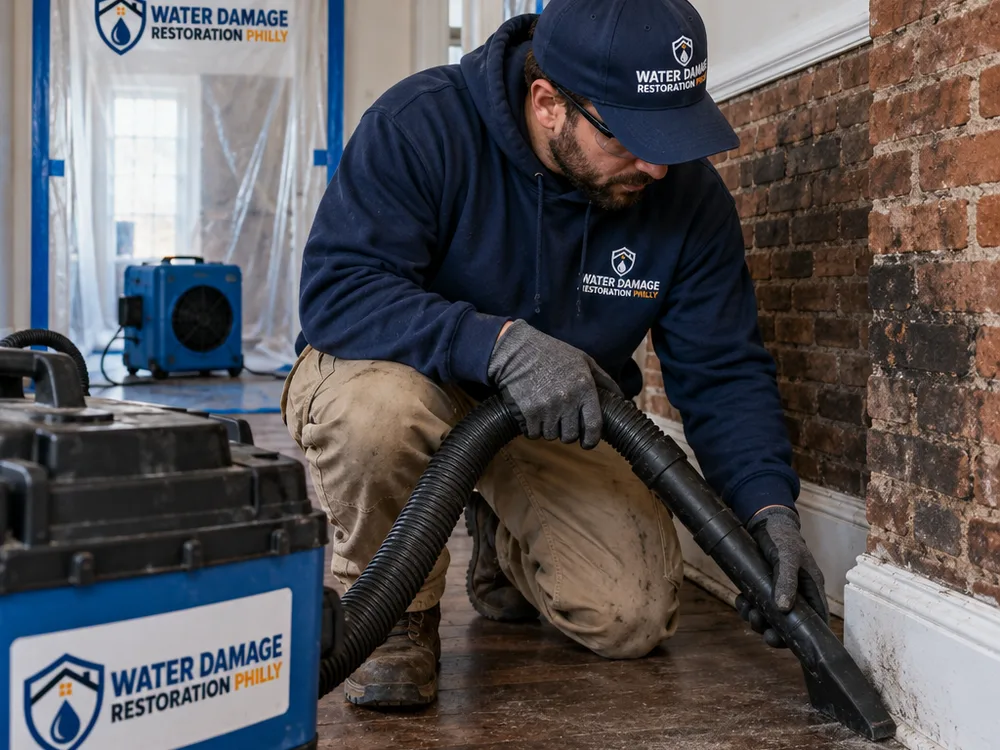
We start by identifying hazards like compromised framing, damaged electrical, and unstable finishes. If a space is not safe to enter, we stabilize and coordinate next steps before cleanup begins.
We document conditions, track what is removed, and keep notes organized for insurance conversations and rebuild planning.
We use HEPA air scrubbers, negative air when needed, and containment barriers so cleanup does not spread soot into unaffected rooms.
We combine detailed cleaning with targeted deodorization and sealing only where it makes sense, because odor control starts with removing residue.
We use dehumidification and moisture mapping so subfloors, framing, and cavities are dried to appropriate levels before rebuild.
We assess fire, smoke, and water impact; identify what can be cleaned versus removed; and secure openings with board-up or temporary protection when needed.
We photograph and document conditions, then decide whether contents can be cleaned on-site or require pack-out for detailed cleaning and inventory.
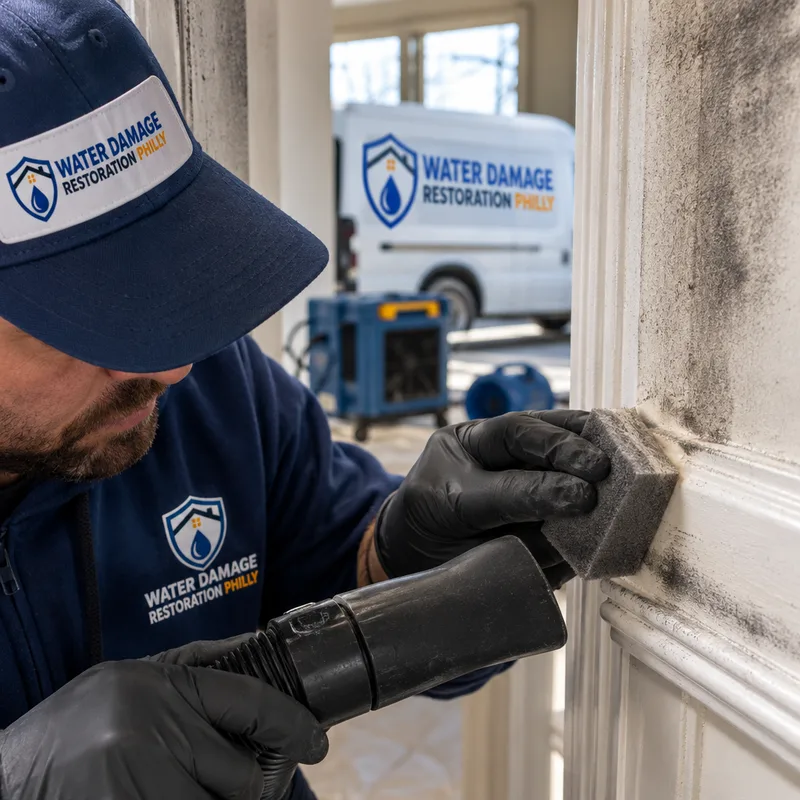
We start with dry methods such as HEPA vacuuming and soot sponges, then shift to wet cleaning and specialty products where needed.
When suppression water is present, we extract it, set drying equipment, and track moisture readings until materials are ready for repair.
After residues are removed, we treat remaining odor sources using professional deodorization methods and complete a detailed clean.
When cleaning and drying are complete, we provide a clear status update and documentation so repairs can move forward without hidden soot or lingering odor issues.
Fire damage restoration in Philadelphia typically ranges from about $2,500 to $12,000 for smaller losses focused on smoke and soot cleanup and deodorization, while larger fires with significant demolition, drying, and multi-room cleaning often run $15,000 to $50,000+ depending on the structure and extent of damage.
Final pricing depends on affected square footage, residue type, how far smoke traveled, how much material must be removed, the amount of water from suppression, access constraints, and whether contents require pack-out. Exact cost is confirmed after an on-site inspection and a written scope.
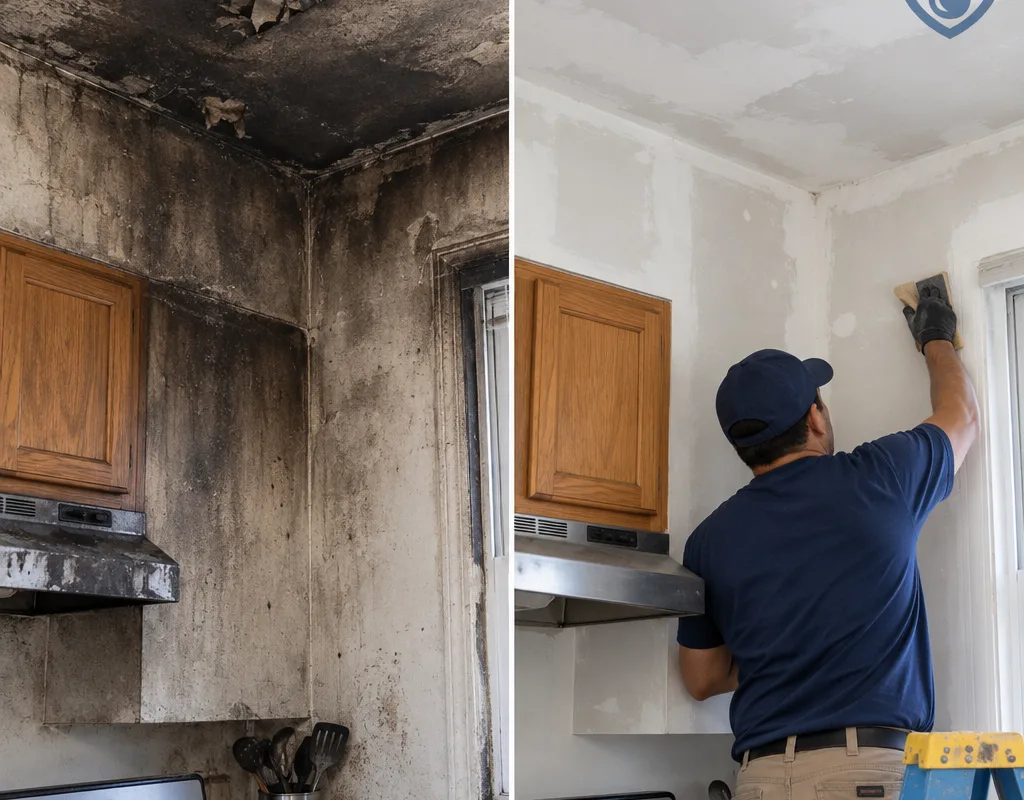
Water Damage Restoration Philly can inspect the damage, explain what can be cleaned versus removed, and lay out a written restoration plan that fits your property and timeline.